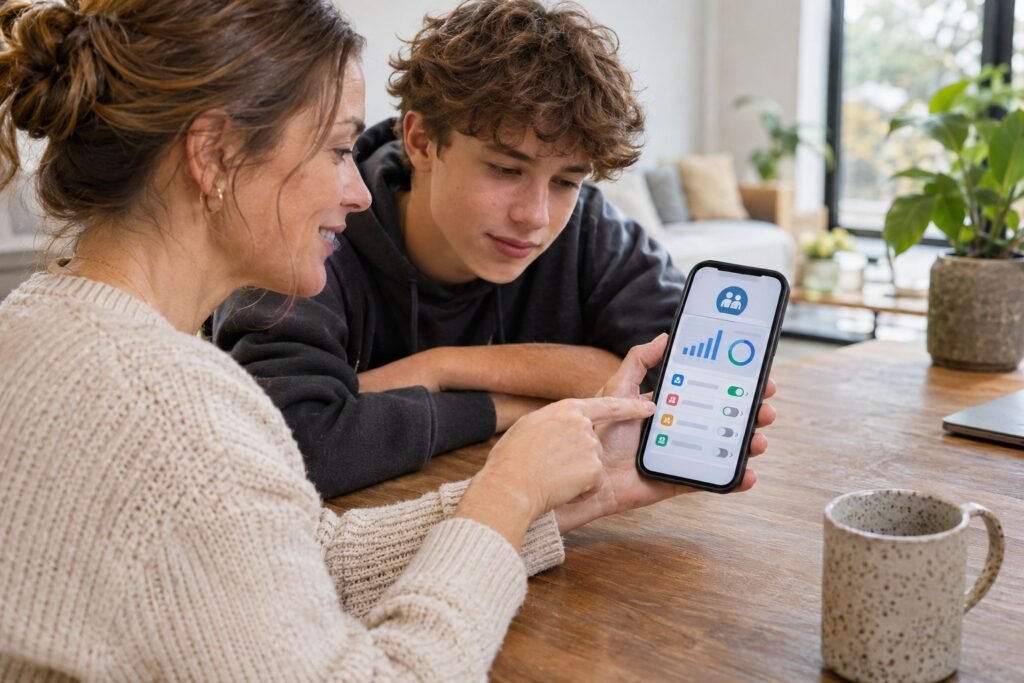
TikTok has redesigned its Family Pairing feature to give parents greater visibility into how their teenagers use the platform. The updated dashboard introduces daily insights into screen time, follower and following activity, connected accounts, content interests and publicly shared posts. TikTok is also developing a parental notification system for repeated searches associated with self-harm, although this alert is not yet available.
The announcement was published through TikTok’s newsroom in November 2026 and forms part of the company’s wider efforts to strengthen online safety for younger users.
Key takeaways
- TikTok’s redesigned Family Pairing dashboard lets parents monitor screen-time patterns, changes in followers and followed accounts, blocked accounts and publicly shared posts.
- Parents can view samples of content from verified creators their teenagers follow, while messaging visibility is planned for the coming months.
- TikTok is developing alerts for repeated searches associated with self-harm in collaboration with external mental health and digital safety experts.
What is changing in TikTok Family Pairing?
Family Pairing is TikTok’s parental supervision feature that allows parents and teenagers to connect their accounts and manage selected safety and privacy settings together.
The redesigned experience expands the information available to parents. Instead of focusing primarily on individual restrictions and settings, the updated dashboard brings several aspects of teenage activity together in one place.
According to TikTok’s official Family Pairing announcement, the new experience is organised around four areas: screen time, interactions, content interests and posts.
The company says the information is updated daily. Parents can access the redesigned experience through web browsers as well as the TikTok application, giving them another way to review their teenagers’ activity.
This approach is intended to provide context about how teenagers use the platform, rather than simply allowing parents to switch individual restrictions on or off.
TikTok Family Pairing introduces four monitoring features
The redesigned dashboard focuses on different aspects of teenage activity. Each section gives parents information that may help them understand their children’s experiences on the platform.
1. Screen-time monitoring becomes more prominent
Screen time is now the first insight displayed in the redesigned dashboard.
Parents can view their teenagers’ average usage, nighttime activity and existing time-management settings. This information can help families understand whether TikTok usage is concentrated during particular periods or extending into late-night hours.
TikTok already provides screen-time management tools for younger users. The company says teen accounts have a daily screen-time setting of 60 minutes by default, alongside other age-appropriate safety and privacy protections.
The redesigned dashboard makes this information easier to access and understand. Parents can use the insights to discuss healthier digital habits or adjust available time-management settings.
2. Parents can see follower and following activity
The interactions section provides greater visibility into teenagers’ social connections.
Parents can now see changes in their teenager’s follower and following counts. They can also view the accounts their teenager is connected with and the accounts they have blocked.
This information could help parents understand changes in their children’s online social circles. For example, a sudden change in follower activity may provide an opportunity to discuss new online interactions.
However, these features should not be confused with access to private conversations. TikTok has not announced that parents can currently read their teenagers’ direct messages through the redesigned dashboard.
The company says it plans to introduce visibility into who teenagers are messaging in the coming months. This is a planned addition, not a feature that should be assumed to be available immediately.
3. Parents can explore content interests
Another addition allows parents to watch a sample of content from verified creators their teenagers follow.
This feature provides a snapshot of the communities and topics that may influence a teenager’s experience on TikTok. It could include interests such as education, entertainment, fitness, technology or other subjects.
TikTok says more than 80% of the parents of teenagers it consulted expressed interest in this type of feature.
The information may help parents understand what their children are watching without needing to inspect every video individually.
However, the feature is not a complete record of everything a teenager watches. It provides a sample of content from verified creators they follow, rather than a full viewing history or a complete picture of their For You feed.
4. Public posts and view counts become easier to review
The fourth section focuses on content teenagers publish publicly.
Parents can see what their teenagers have posted publicly during each week, alongside the number of views those posts received.
This provides additional context about teenagers’ public activity and the potential reach of their content.
For families, the information could support discussions about digital footprints, responsible posting and the consequences of sharing personal information online.
It is important to distinguish public posts from private content. TikTok’s announcement specifically describes visibility into publicly shared posts, not unrestricted access to private videos or drafts.
TikTok is developing alerts for repeated self-harm searches
One of the more sensitive developments involves a planned notification system related to potentially harmful searches.
TikTok says it is working with the Digital Wellness Lab at Boston Children’s Hospital and Dr Dan Reidenberg to develop an alert for parents when a teenager repeatedly searches for recognised terms associated with self-harm.
Dr Reidenberg is identified by TikTok as the Founder and Director of Safe Online Standards and Affiliate Faculty at the Johns Hopkins Center for Suicide Prevention.
The proposed notification is intended to inform parents that their teenager may have attempted to find potentially harmful material. It will also provide guidance on how to approach the situation and begin a supportive conversation.
This is an area where the distinction between a search signal and a confirmed mental health concern matters.
Repeated searches do not necessarily establish that a teenager intends to harm themselves. A person might search for such terms for educational reasons, curiosity or because they are concerned about someone else.
Consequently, alerts need to be interpreted carefully and should not be treated as diagnoses or proof of harmful intentions.
TikTok’s announcement also includes comments from Wendy Orchard, Chief Executive Officer of the International Association for Suicide Prevention. She welcomed the company’s engagement with experts and emphasised the importance of careful, evidence-based communication when responding to potential self-harm risks.
The notification remains under development. TikTok has not provided a confirmed public release date or a complete explanation of its detection criteria.
TikTok also introduces an Educator’s Guide
The Family Pairing redesign is accompanied by a separate initiative aimed at schools and educational communities.
TikTok has introduced an Educator’s Guide developed in consultation with teachers and youth safety experts. It provides information about how the platform works and offers resources for discussing online safety, digital wellbeing and media literacy.
The guide is intended to help teachers support conversations with students and families about responsible digital behaviour.
This initiative recognises that teenagers’ online experiences extend beyond their homes. Schools can also help young people understand privacy, misinformation, online communication and the consequences of sharing content publicly.
TikTok says additional classroom resources will be added in the coming weeks.
The announcement was also discussed at the company’s 2026 Safety and Innovation Forum in London, where journalists, creators and external experts were invited to discuss youth safety and other platform developments.
How TikTok’s redesigned parental controls affect teenagers’ privacy
The additional visibility raises an important question: how can parents supervise teenagers without removing their privacy and independence?
TikTok says the redesigned Family Pairing experience follows three principles: clarity, context and respect for teenage privacy.
The idea is to give parents useful information while encouraging conversations instead of relying exclusively on restrictions.
This distinction matters because teenagers increasingly use social platforms to communicate, discover interests, learn new skills and participate in online communities.
Excessive monitoring could potentially discourage open communication between parents and children. On the other hand, limited awareness of online activity can make it harder for parents to recognise concerning changes.
The redesigned dashboard attempts to address this balance by presenting selected information about activity and social connections.
However, TikTok’s description of its privacy principles represents the company’s stated design approach. The announcement does not provide an independent privacy assessment or a detailed technical explanation of how every dashboard insight is collected, retained or processed.
Parents should therefore discuss the use of Family Pairing with their teenagers and explain which information they can access.
For additional information about the available controls, users can consult TikTok’s Family Pairing Help Centre documentation.
How the update compares with traditional parental controls
Traditional parental controls generally focus on managing access, limiting screen time, restricting applications or filtering unsuitable content.
TikTok’s redesigned Family Pairing takes a somewhat different approach by combining existing management options with information about activity on its own platform.
| Feature | Traditional device-level controls | Redesigned TikTok Family Pairing |
|---|---|---|
| Screen-time management | Available on supported devices | TikTok activity insights and settings |
| App restrictions | Available on supported devices | TikTok-specific controls |
| Follower visibility | Generally not a standard device-control feature | Available |
| Followed accounts | Generally not a standard device-control feature | Available |
| Public post monitoring | Not generally included | Available |
| Content-interest insights | Not generally included | Samples from verified creators followed |
| Direct-message visibility | Depends on the application and service | Planned for a future update |
The comparison highlights an important limitation: Family Pairing is designed around TikTok activity. It does not replace device-level parental controls or provide a complete overview of everything a teenager does online.
For example, parents who want to manage application downloads, device usage or access to other social networks will still need the appropriate operating-system controls.
The feature is therefore best understood as an additional layer of supervision rather than a complete parental monitoring solution.
What parents should know about availability
TikTok has announced the redesigned experience as a launched feature and confirmed that it is available through web browsers as well as its application.
However, the company has not provided a detailed country-by-country availability schedule in the announcement.
Parents should also distinguish between features available now and those still being developed.
The updated screen-time, interactions, content-interest and public-post insights form part of the redesigned experience. Messaging visibility is planned for the coming months, while the self-harm search notification is still under development.
TikTok has not announced separate subscription charges for the redesigned Family Pairing experience. The announcement does not identify a new paid tier or an additional purchase requirement.
Families can find information about existing parental settings through the TikTok Safety Centre.
What happens next for TikTok’s parental monitoring tools?
The next developments to watch are the planned messaging visibility feature and the proposed self-harm search notification system.
Both additions could change how parents use Family Pairing, particularly when discussing social interactions and potential online safety concerns.
The messaging feature could provide additional context about teenagers’ connections, although TikTok has not yet explained precisely what information parents will receive or how the feature will operate.
The self-harm alert will require particular care because automated notifications involving sensitive searches can create concerns about false positives, privacy and the interpretation of personal behaviour.
TikTok’s collaboration with external experts is relevant to this process, but the practical effectiveness of the system will depend on its eventual design and implementation.
For now, the redesigned dashboard provides parents with more information about teenagers’ activity on TikTok, while leaving some of the proposed monitoring capabilities for future releases.
Frequently asked questions
1. What is TikTok Family Pairing?
TikTok Family Pairing is a parental supervision feature that connects a parent’s account with a teenager’s account. It allows families to manage selected safety, privacy and screen-time settings while providing parents with information about their teenager’s TikTok activity.
2. What new features does TikTok Family Pairing offer?
The redesigned experience includes screen-time insights, follower and following activity, connected and blocked accounts, samples of content from verified creators and publicly shared posts with view counts. These insights are updated daily.
3. Can parents read their teenagers’ TikTok messages?
No, the current announcement does not introduce access to the contents of private messages. TikTok says it plans to let parents see who their teenagers are messaging in the coming months, but it has not confirmed that this will include reading conversations.
4. Can parents see everything their teenagers watch on TikTok?
No. The content-interest feature provides a sample of content from verified creators that teenagers follow. It does not give parents a complete viewing history or unrestricted access to every video in a teenager’s For You feed.
5. Does TikTok Family Pairing send self-harm alerts to parents?
TikTok is developing an alert system for repeated searches involving recognised self-harm-related terms. The feature is being developed with external experts, but it has not been announced as generally available.
6. Can parents use TikTok Family Pairing on a computer?
Yes. TikTok says the redesigned experience is also available through web browsers. This gives parents another way to access the parental monitoring tools without relying exclusively on the mobile application.
7. Does TikTok Family Pairing cost money?
TikTok’s announcement does not identify an additional fee or subscription requirement for the redesigned experience. Family Pairing is presented as part of TikTok’s existing parental safety features.
8. Does TikTok Family Pairing replace phone parental controls?
No. Family Pairing focuses on activity and safety settings within TikTok. Device-level parental controls are still useful for managing application access, overall screen time and other activities outside the platform.
