Introduction
Entertainment in the United States is constantly evolving. From blockbuster movies and chart-topping music to streaming platforms, viral social media trends, and competitive gaming, Americans have more ways to enjoy their favorite content than ever before. What once depended heavily on television schedules, movie theaters, and radio stations has become an on-demand experience shaped by technology, personal interests, and online communities.
In 2026, the American entertainment industry continues to reflect changing audience preferences. Viewers are exploring new streaming releases, music fans are discovering emerging artists through digital platforms, and gaming communities are becoming an increasingly important part of mainstream culture. Meanwhile, celebrities, creators, and entertainment brands are finding new ways to connect with audiences.
Whether you enjoy watching movies, following celebrity news, listening to music, attending live events, or discovering online trends, understanding the latest developments can help you stay connected to American pop culture.
This guide explores the biggest United States entertainment trends, explains why they matter, and highlights what audiences can expect from the industry in 2026.
1. Streaming Platforms Continue to Transform American Entertainment
Streaming has fundamentally changed how people in the United States watch television shows, films, documentaries, and other digital content. Instead of waiting for scheduled broadcasts, audiences can choose what they want to watch and when they want to watch it.
Platforms such as Netflix, Disney+, Amazon Prime Video, Max, and Hulu have become important parts of everyday entertainment.
The Growing Popularity of On-Demand Content
Modern viewers increasingly appreciate flexibility. Someone commuting to work might watch an episode on a smartphone, while a family may enjoy a movie together on a smart television in the evening.
Streaming services offer different types of programming, including:
- Original television series and exclusive movies.
- Documentaries covering real-life stories and important events.
- Reality television and lifestyle programs.
- International films and television shows.
- Comedy specials, sports coverage, and family entertainment.
This variety allows viewers to explore content beyond traditional television programming.
Why Streaming Services Are Competing for Attention
The growing number of streaming platforms has created more choices, but it has also made entertainment subscriptions harder to manage. Many households compare subscription prices, rotate services, or cancel platforms they rarely use.
For viewers, the practical approach is to choose services based on their actual interests rather than subscribing to every available platform.
What is the biggest change in American television entertainment?
The biggest change is the shift toward on-demand viewing, where audiences have greater control over what they watch, when they watch it, and which devices they use.
2. Movies and Hollywood Are Adapting to Changing Audiences
The American film industry remains one of the most influential parts of global entertainment. Hollywood continues to attract audiences through major theatrical releases, independent productions, animated films, and streaming exclusives.
However, moviegoers are becoming more selective about which films deserve their time and money.
Big Franchises and Original Stories
Established entertainment franchises continue to attract attention because audiences already recognize their characters and fictional worlds. Superhero films, science-fiction adventures, animated sequels, and fantasy productions remain familiar parts of the Hollywood landscape.
At the same time, original films and independent productions provide opportunities for fresh storytelling.
Many viewers are interested in movies that offer something different, whether through compelling characters, realistic situations, cultural perspectives, or unexpected storylines.
The Changing Movie Theater Experience
Movie theaters still provide something that home entertainment cannot completely reproduce: a shared viewing experience with a large screen, powerful sound, and an audience.
Premium formats, comfortable seating, special screenings, and major opening-weekend events help theaters create experiences that feel different from watching a film at home.
Nevertheless, ticket prices and convenience influence viewing decisions. Some people prefer waiting for streaming releases, while others visit theaters for films they consider worth seeing on the big screen.
Are movie theaters still popular in the United States?
Yes. Movie theaters remain an important part of American entertainment, particularly for major releases and films that benefit from a large-screen experience. However, streaming has given audiences another convenient way to enjoy movies.
3. Music Trends Are Being Shaped by Digital Platforms
Music remains a central part of American popular culture. From hip-hop and pop to country, rock, R&B, electronic music, and Latin music, the United States has a diverse musical landscape.
Digital platforms have changed how listeners discover artists, follow releases, and share their favorite songs.
Social Media and Music Discovery
Short-form videos and social media platforms have become influential tools for music discovery. A song can attract attention through a dance challenge, a memorable video clip, a creator’s recommendation, or a popular online discussion.
This gives emerging musicians opportunities to reach listeners without relying exclusively on traditional radio promotion.
However, viral popularity does not always translate into long-term success. Artists still need strong songwriting, consistent releases, live performances, and meaningful relationships with their audiences.
Live Concerts and Music Festivals
Live music continues to attract fans who want experiences beyond digital listening. Concerts allow audiences to connect with performers, enjoy live arrangements, and share memorable moments with other fans.
Music festivals also bring together different genres, performers, food vendors, and cultural experiences.
Popular events such as Coachella, Lollapalooza, and the New Orleans Jazz & Heritage Festival demonstrate the diversity of the American live music scene.
For concertgoers, planning ahead is essential. Checking official event announcements, ticket conditions, venue policies, and transportation arrangements can help avoid unnecessary problems.
4. Gaming and Esports Are Becoming Mainstream Entertainment
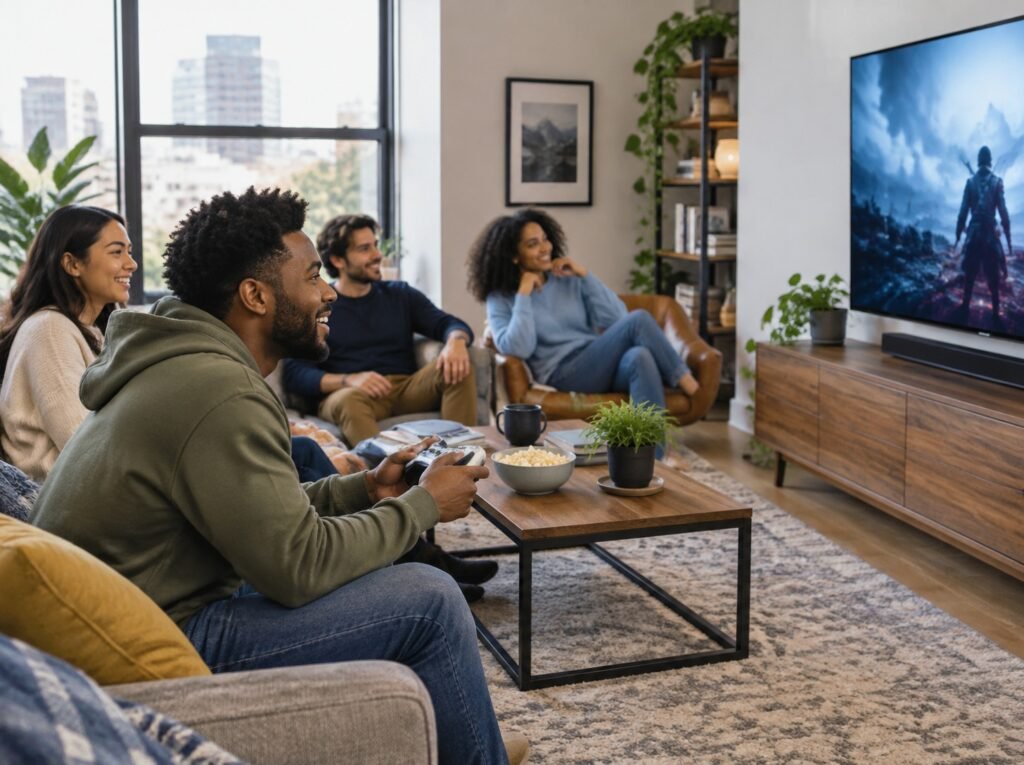
Video games are no longer viewed simply as a hobby for children or dedicated gaming enthusiasts. They have developed into a major entertainment category that attracts people of different ages and backgrounds.
Gaming combines storytelling, competition, creativity, social interaction, and technology.
Why Online Gaming Is So Popular
Modern games offer experiences that extend beyond traditional single-player entertainment. Players can compete with friends, join online communities, explore virtual environments, and participate in multiplayer events.
Popular gaming categories include:
- Action and adventure games.
- Sports and racing simulations.
- Strategy and role-playing games.
- Multiplayer online games.
- Mobile and casual games.
Streaming platforms also allow gamers to share gameplay, communicate with viewers, and build communities around their interests.
The Growth of Esports
Esports has introduced organized competitive gaming to larger audiences. Professional players and teams participate in tournaments that attract spectators both online and at live venues.
Games such as League of Legends, Valorant, Counter-Strike 2, and Fortnite have helped demonstrate the entertainment potential of competitive gaming.
For viewers, esports offers the excitement of competition combined with the personalities and stories of professional players.
Gaming is also creating opportunities in content production, event management, broadcasting, game development, and digital marketing.
5. Celebrity Culture and Social Media Influence Pop Culture
Celebrity culture remains an important part of United States entertainment. Actors, musicians, athletes, influencers, and digital creators regularly shape public conversations through their work and online presence.
However, the way audiences follow celebrities has changed significantly.
Social Media Creates Direct Connections
In the past, fans mainly learned about celebrities through television interviews, magazines, newspapers, and entertainment programs.
Today, social media allows public figures to communicate directly with their followers. They can share behind-the-scenes moments, announce projects, discuss personal interests, and respond to audience reactions.
This direct communication makes celebrity culture feel more immediate and interactive.
The Rise of Digital Creators
Online creators have become an important part of the modern entertainment industry. Some build audiences through comedy, beauty content, gaming, travel, food, lifestyle videos, or educational entertainment.
Their influence can extend into brand partnerships, product launches, live events, and traditional media projects.
However, audiences should remember that social media content does not always present the complete picture. Viral claims, celebrity rumors, and misleading headlines should be checked against reliable reporting before being treated as facts.
Why is social media important in American entertainment?
Social media helps artists, celebrities, and creators reach audiences directly, promote their projects, build communities, and participate in cultural conversations without depending entirely on traditional media outlets.
6. Live Events, Sports, and Family Entertainment Remain Important
Although digital entertainment continues to grow, many Americans still value experiences outside their homes.
Live events bring people together and create opportunities for social interaction, cultural participation, and shared excitement.
Sports as a Major Entertainment Category
Professional and college sports are deeply connected to American entertainment culture. The NFL, NBA, MLB, NHL, and major college competitions attract millions of viewers throughout the year.
Events such as the Super Bowl, NBA Finals, World Series, and major college football games generate attention beyond sports itself.
Halftime performances, advertising campaigns, celebrity appearances, and online discussions help turn major sporting events into broader entertainment experiences.
Family-Friendly Entertainment
Family entertainment also remains an important part of the industry. Animated films, children’s television, theme parks, interactive attractions, and family-oriented live performances provide options for audiences of different ages.
Places such as Disneyland, Walt Disney World, and Universal theme parks combine storytelling, attractions, characters, and technology to create immersive experiences.
Families planning entertainment activities should consider ticket costs, age recommendations, accessibility, schedules, and individual interests before making arrangements.
The continuing popularity of live experiences shows that digital entertainment has not eliminated people’s desire to participate in activities together.
7. Artificial Intelligence and Technology Are Changing Entertainment
Technology is influencing nearly every part of the entertainment industry, from content creation and distribution to audience recommendations and production workflows.
Artificial intelligence is one of the most important developments attracting attention in 2026.
AI in Film, Music, and Digital Production
Entertainment companies are exploring AI-assisted tools for editing, visual effects, animation, sound production, translation, and other creative tasks.
These technologies can help production teams experiment with ideas and complete certain technical processes more efficiently.
However, AI also raises important questions about copyright, creative ownership, performers’ rights, consent, and the use of training material.
Human creativity, professional judgment, and responsible production practices remain essential.
Personalized Entertainment Recommendations
Streaming platforms and digital services use recommendation systems to suggest content based on viewing or listening activity.
For example, someone who regularly watches documentaries may receive recommendations for similar programs, while a music listener may discover artists connected to their favorite genres.
Personalization makes content easier to find, but it can also limit exposure to unfamiliar ideas if users rely exclusively on automated recommendations.
Exploring different genres, independent creators, and international productions is a useful way to discover something new.
Frequently Asked Questions About United States Entertainment
1. What is popular in United States entertainment in 2026?
Popular entertainment categories include streaming television, Hollywood movies, live music, gaming, esports, celebrity culture, sports events, and social media content. Audience interests vary depending on age, location, and personal preferences.
2. What are the most popular entertainment platforms in the United States?
Major entertainment platforms include Netflix, Disney+, Amazon Prime Video, Hulu, Max, YouTube, Spotify, and Apple Music. Each offers different content, features, and subscription options.
3. How has technology changed the American entertainment industry?
Technology has made entertainment more accessible through streaming, digital music, online gaming, social media, and personalized recommendations. AI-assisted production tools are also changing creative workflows.
4. Is Hollywood still important in the United States entertainment industry?
Yes. Hollywood remains a major center of film and television production. Although streaming services and independent creators have expanded the industry, major studios continue to influence movie releases, popular franchises, and international entertainment.
5. What is the future of entertainment in the United States?
The future will likely involve greater personalization, interactive content, advanced production technology, live experiences, digital creators, and new ways to distribute movies, music, and games. Audience demand and responsible innovation will influence how the industry develops.
Conclusion
United States entertainment in 2026 is diverse, technology-driven, and increasingly shaped by audience choice. Streaming platforms have transformed television viewing, Hollywood continues to adapt to changing movie preferences, digital platforms influence music discovery, and gaming has become a mainstream entertainment experience.
At the same time, celebrity culture, sports, concerts, festivals, and family attractions demonstrate that people still value shared experiences and personal connections.
Technology, particularly artificial intelligence, is creating new possibilities while raising important questions about creativity, ownership, and responsible content production.
The best way to stay informed is to explore different entertainment categories, follow reliable industry news, and choose experiences that match your interests. Whether you prefer movies, music, gaming, sports, or celebrity updates, the American entertainment landscape offers something worth discovering.