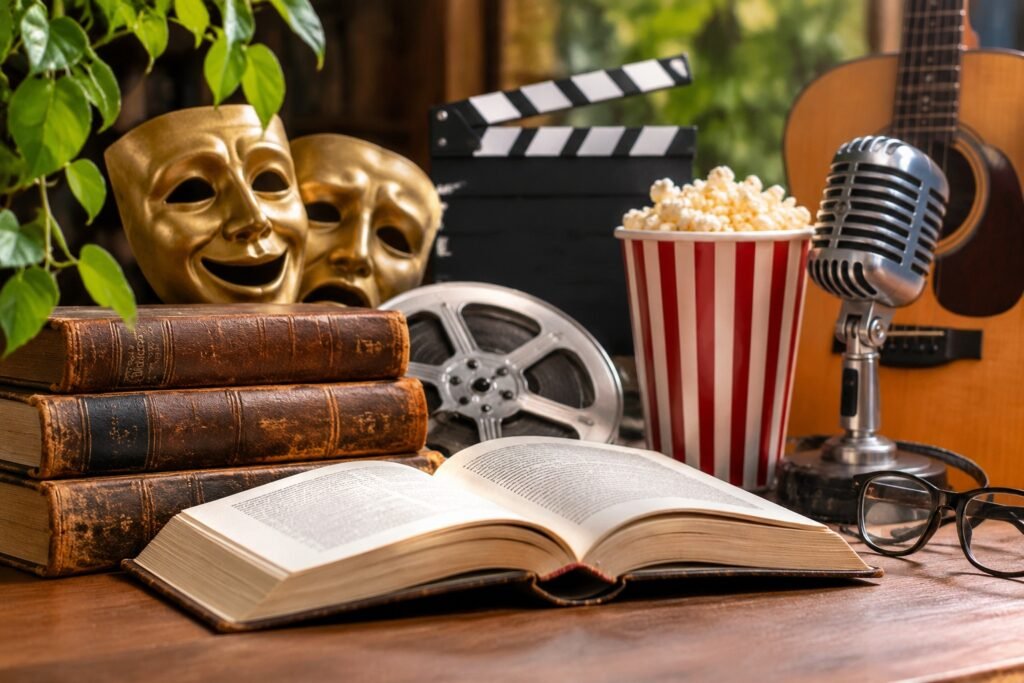
Entertainment is such a familiar part of everyday life that most people rarely stop to consider where the word actually comes from. Whether we watch a movie, listen to music, attend a concert, play a video game, or enjoy a theatrical performance, entertainment plays an important role in how we relax, connect with others, and experience the world. But have you ever wondered how the word entertainment developed and what its original meaning was?
The etymology of entertainment reveals a fascinating journey through language, history, and cultural change. Interestingly, the word did not originally refer to amusement, comedy, or performances. Its earliest meanings were connected to maintaining, holding, supporting, and keeping something going.
Understanding the history of entertainment helps explain how a word associated with hospitality and responsibility gradually became connected with pleasure, recreation, and the performing arts.
In this article, we explore the origins of entertainment, its linguistic roots, how its meaning evolved, and why the word continues to represent such an important part of modern human culture.
What Is the Meaning of Entertainment?
Entertainment refers to an activity, performance, experience, or form of content designed to capture people’s attention, provide enjoyment, and offer relaxation or amusement.
It includes a wide range of activities, such as:
- Watching television programs and films.
- Listening to music and attending concerts.
- Reading novels, comics, and magazines.
- Playing video games and participating in recreational activities.
- Watching theatrical performances, comedy shows, and live events.
- Attending festivals, sporting events, and cultural celebrations.
In simple terms, entertainment is something people experience for enjoyment, interest, or pleasure.
However, the modern definition represents only one stage in the word’s historical development. Its original linguistic meaning was considerably broader.
The Etymology of Entertainment: Where Does the Word Come From?
The word entertainment has its roots in the verb entertain, which developed through Middle English and Anglo-French linguistic influences.
The English verb entertain is generally traced to Anglo-French entretenir and Old French entretenir. These forms are connected to the Latin elements inter, meaning “between” or “among,” and tenere, meaning “to hold.”
The original idea was therefore associated with holding something together, maintaining it, or keeping it in a particular condition.
Over time, the meaning expanded to include receiving guests, providing hospitality, occupying someone’s attention, and eventually offering amusement.
The noun entertainment developed from the verb entertain with the suffix -ment, which is commonly used to form nouns describing an action, process, or result.
Understanding the Word’s Linguistic Components
Breaking down the word helps make its history easier to understand.
Entertain: The verb describing the act of receiving, maintaining, occupying, or amusing someone.
-ment: A suffix that transforms a verb into a noun, referring to an action, process, or result.
Together, these elements produce entertainment, a noun that originally referred to the act or process of entertaining.
This linguistic structure is important because it demonstrates how English frequently develops new nouns by adding recognizable suffixes to existing verbs.
What Did Entertainment Originally Mean?
Entertainment did not always mean watching a movie, attending a concert, or enjoying a comedy performance.
Historically, the associated verb had meanings that included maintaining, supporting, receiving, and accommodating.
For example, entertaining a visitor could mean welcoming that person into a home, providing food, offering accommodation, and ensuring their comfort.
Similarly, entertaining an idea meant considering or maintaining that idea in one’s mind.
The association with amusement developed gradually as the word became increasingly connected with occupying people’s attention and providing pleasure.
How the Meaning of Entertainment Changed Throughout History
Language is constantly changing because societies, technologies, and cultural habits change. Entertainment provides an excellent example of how a word can develop new meanings while retaining connections to its original sense.
Its historical development can be understood through several important stages.
1. The Early Meaning: Maintaining and Supporting
The earliest linguistic roots of entertainment were associated with holding, maintaining, or keeping something in a particular condition.
The Latin verb tenere, meaning “to hold,” contributed to the development of related words in several European languages.
During the early stages of its development, the associated French verb could refer to maintaining relationships, supporting arrangements, or keeping something going.
This meaning was practical rather than recreational.
2. The Medieval Period: Hospitality and Receiving Guests
During medieval times, entertaining became increasingly associated with hospitality.
Welcoming guests was an important social responsibility, particularly among wealthy families, nobles, and members of royal households.
Hosts were expected to provide food, accommodation, conversation, and sometimes music or other activities.
These gatherings were not simply opportunities for amusement. They also helped establish relationships, demonstrate social status, and strengthen political or family connections.
The idea of entertaining someone therefore combined hospitality with creating an enjoyable experience.
3. The Renaissance: Music, Theatre, and Social Enjoyment
During the Renaissance, European culture experienced significant developments in literature, music, theatre, and artistic expression.
Public performances and private gatherings became important forms of recreation.
Theatre companies performed plays, musicians entertained audiences, and storytelling remained a popular activity.
As these cultural practices expanded, the concept of entertainment became increasingly associated with activities designed to attract attention and provide enjoyment.
This period helped establish the relationship between entertainment and artistic performance that remains familiar today.
4. The Modern Era: Mass Entertainment and Popular Culture
The Industrial Revolution introduced major changes in how people worked, travelled, communicated, and spent their free time.
Urban populations increased, literacy expanded, and new technologies created opportunities for commercial entertainment.
Newspapers, theatres, music halls, circuses, and public sporting events became increasingly accessible.
Later developments in photography, recorded music, cinema, radio, and television transformed entertainment into a major global industry.
Today, digital platforms, streaming services, social media, and interactive games have expanded the meaning even further.
Entertainment is no longer limited to physical locations or scheduled performances. People can access it almost anywhere and at any time.
Why Is the Original Meaning of Entertainment Important?
Understanding the original meaning of entertainment provides more than an interesting linguistic fact. It offers insight into how human societies have understood hospitality, communication, recreation, and social relationships.
There are several reasons why its etymology remains relevant.
Entertainment Connects People
One of the oldest aspects of entertaining is bringing people together.
Historically, hosts welcomed visitors into their homes and organized gatherings to encourage conversation and strengthen relationships.
Modern entertainment continues this tradition.
Families watch films together, friends attend concerts, and communities organize festivals. Although the activities have changed, the social purpose remains remarkably similar.
Entertainment Reflects Cultural Values
Every society develops its own forms of entertainment based on its traditions, beliefs, and lifestyle.
For example, traditional storytelling, folk music, dance performances, and local festivals preserve cultural identities while providing enjoyment.
Modern entertainment also reflects changing social attitudes, technological developments, and public interests.
Studying the word’s history therefore helps us recognize that entertainment is not simply a commercial product. It is also an important expression of human culture.
Entertainment Has Always Been Connected to Attention
The historical meaning of entertaining someone included occupying their attention.
This connection remains central to modern entertainment.
A successful film captures viewers’ interest through storytelling, visuals, music, and emotional experiences. Similarly, a video game keeps players engaged through challenges, interaction, and rewards.
Although the methods have become more sophisticated, the underlying purpose of engaging an audience remains consistent.
Different Types of Entertainment in Modern Society
Modern entertainment covers a wide range of industries and activities. Understanding these categories helps demonstrate how far the concept has developed from its original association with hospitality and maintaining relationships.
1. Digital Entertainment
Digital entertainment includes online videos, streaming platforms, mobile applications, podcasts, and interactive content.
It has transformed how audiences discover and consume entertainment.
Instead of depending entirely on television schedules or cinema screenings, people can choose what they want to watch or listen to whenever they prefer.
2. Live Entertainment
Live entertainment involves performances or activities experienced directly by an audience.
Examples include:
- Concerts and music festivals.
- Theatre and comedy performances.
- Dance shows and cultural events.
- Circuses and live exhibitions.
- Sporting competitions.
Live entertainment creates a shared experience that is often different from watching recorded content.
3. Film and Television Entertainment
Movies, television series, documentaries, and animated productions remain major forms of entertainment.
They combine storytelling, acting, sound, visuals, and creative direction to communicate ideas and emotions.
Beyond providing amusement, these productions can introduce audiences to different cultures, historical events, and social issues.
4. Interactive Entertainment
Interactive entertainment allows audiences to participate rather than simply observe.
Video games, virtual reality experiences, online competitions, and interactive digital platforms are common examples.
This category demonstrates how technology has expanded entertainment from a largely passive experience into an activity involving personal choices and direct participation.
5. Traditional and Cultural Entertainment
Traditional entertainment includes folk music, storytelling, cultural dances, festivals, and community celebrations.
These activities often have historical significance because they preserve traditions and pass cultural knowledge between generations.
They also demonstrate that entertainment existed long before modern media technologies.
Entertainment Etymology and Its Connection to Other English Words
Exploring related words makes the etymology of entertainment even more interesting.
Several familiar English words share historical or linguistic connections with its development.
Entertain: The verb from which the noun entertainment is formed. It can mean to amuse someone, receive guests, or consider an idea.
Entertainment: A noun describing the activity, process, or experience of entertaining.
Entertainer: A person who provides amusement or enjoyment through performance or another activity.
Entertaining: An adjective describing something enjoyable, interesting, or amusing.
Entertained: The past-tense and past-participle form of the verb entertain.
These related forms illustrate how one word can develop into an entire word family.
It is also worth noting that the Latin root tenere, meaning “to hold,” appears in other English words, including retain, maintain, contain, and detain. Their meanings have developed differently, but they preserve the broader historical connection to holding or keeping.
Frequently Asked Questions About Entertainment Etymology
1. What is the etymology of the word entertainment?
The word entertainment comes from the English verb entertain, which developed through Anglo-French and Old French forms associated with Latin inter and tenere. Its earliest meanings were connected with maintaining, holding, and supporting before expanding to include hospitality and amusement.
2. What did entertainment originally mean?
Entertainment originally had meanings associated with maintaining, supporting, receiving, and accommodating. Over time, it became connected with welcoming guests, occupying attention, and providing enjoyment.
3. When did entertainment start meaning amusement?
The association between entertaining and amusement developed gradually, particularly as the word became connected with hospitality, social gatherings, performances, and activities designed to occupy people’s attention. Its modern recreational meaning evolved over several centuries rather than appearing at one specific moment.
4. What is the difference between entertain and entertainment?
Entertain is a verb that describes an action, such as amusing someone, welcoming guests, or considering an idea. Entertainment is a noun that describes the activity, experience, or result of entertaining.
5. Why is entertainment important in human society?
Entertainment provides enjoyment, relaxation, social connection, and opportunities for cultural expression. It can also educate audiences, preserve traditions, encourage creativity, and bring communities together through shared experiences.
Conclusion: The Fascinating History Behind Entertainment
The etymology of entertainment reveals a fascinating transformation from an idea associated with holding, maintaining, and supporting to a modern concept encompassing amusement, creativity, and cultural expression.
Through centuries of linguistic and social development, the word gradually acquired connections to hospitality, music, theatre, performances, and eventually the global entertainment industry.
Today, entertainment is an essential part of everyday life. Whether experienced through traditional storytelling, live performances, television, films, or digital platforms, it continues to serve one of humanity’s oldest purposes: bringing people together and creating meaningful experiences.
Understanding the origins of entertainment reminds us that language carries the history of human behaviour, culture, and changing social values.
The next time you watch a film, attend a concert, or enjoy a favourite television show, remember that the word describing that experience has a much older and richer history than its modern meaning might suggest.
