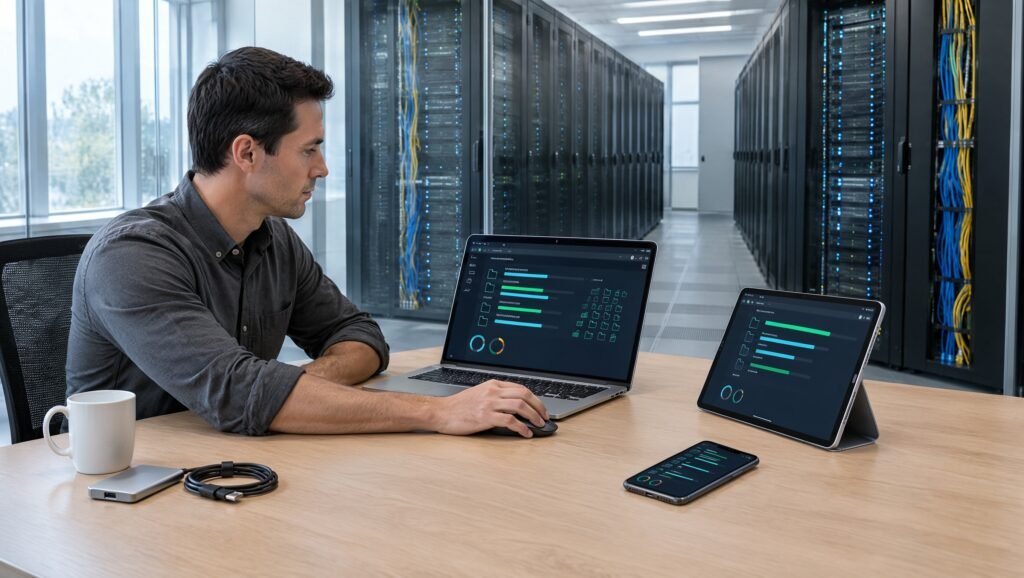
Downloading large files can be frustrating, especially when traditional downloads are slow, interrupted, or require your computer to remain switched on for hours. This is where a cloud based torrent solution can make a difference. Instead of downloading files directly to your computer, you can use a cloud-based service to handle the torrent download remotely and access the finished files through your browser.
For beginners, this approach offers a different way to manage large downloads without depending entirely on local storage, bandwidth, or device performance. However, understanding how it works, what it costs, and how to choose a reliable service is important before getting started.
In this guide, you will learn what cloud based torrenting means, how the technology works, its advantages and disadvantages, how to use it responsibly, and what to consider when selecting a suitable service.
What Is a Cloud Based Torrent?
A cloud based torrent is a method of downloading torrent files through a remote server instead of using your own computer to handle the entire downloading process.
Traditional torrenting relies on peer-to-peer (P2P) technology. Rather than downloading a file from one central server, a torrent client connects to multiple users who share different parts of the same file. These pieces are downloaded and combined to produce the complete file.
Cloud torrenting moves much of this activity to an online platform.
Instead of installing torrent software and downloading files directly to your device, you submit a supported torrent link or magnet link to a cloud-based service. The service processes the download on its own infrastructure and may allow you to access the completed file through a browser or download it to your device.
How Does Cloud Torrenting Work?
The process is relatively straightforward. Although individual platforms have different interfaces, most follow a similar workflow.
- Choose a supported torrent source: Find a legitimate torrent or magnet link for content you are authorised to download.
- Submit the link: Add the torrent or magnet link to your chosen cloud torrent service.
- Remote processing: The platform connects to participating peers and retrieves the available file pieces using its remote infrastructure.
- File completion: Once downloading finishes, the service assembles the pieces into the original file.
- Access your content: Depending on the platform, you can stream, preview, or download the completed file.
The important distinction is that your computer does not need to manage the entire peer-to-peer downloading process.
For example, imagine you need to download a large open-source software distribution. Instead of keeping your laptop connected while the download progresses, you could use a compatible cloud service and retrieve the completed file later.
Cloud Based Torrent vs Traditional Torrenting
Both approaches use peer-to-peer technology, but the way they handle downloads is different.
Traditional torrenting requires a torrent client installed on your device. Your computer connects to peers, downloads file pieces, and stores them locally.
Cloud based torrenting uses remote infrastructure to perform these tasks. Your interaction is generally limited to submitting links and managing files through an online interface.
Here are the main differences:
| Feature | Traditional Torrenting | Cloud Based Torrent |
|---|---|---|
| Software installation | Usually required | Often browser-based |
| Download location | Local device | Remote server |
| Device availability | Usually needed during downloading | Not necessarily needed |
| Local storage | Required during download | Depends on the service |
| Internet connection | Used for P2P activity | Used to access the service and retrieve files |
| Management | Through torrent software | Through an online dashboard |
| Privacy | Depends on client and network configuration | Depends on the provider and its policies |
Which Option Is Better?
Neither option is automatically better for everyone.
Traditional torrenting provides more direct control over download settings, peer connections, upload behaviour, and file management. It can also be more suitable for people who regularly work with large files and understand how torrent clients operate.
Cloud based torrenting may be more convenient for beginners who prefer a browser-based interface and do not want to manage a dedicated torrent application.
Your choice should depend on your technical requirements, privacy expectations, available storage, and the reliability of the service.
5 Major Benefits of Using a Cloud Based Torrent Service
Cloud torrent services have become an alternative for people who want more flexibility when managing large downloads. However, their actual benefits depend on the provider, infrastructure, and subscription plan.
1. Download Files Without Keeping Your Computer Running
One of the main attractions of cloud based torrenting is remote processing.
With traditional torrent software, your device generally needs to remain connected to the internet while downloading. A cloud service can continue processing an accepted download on its own servers, even after you close your browser or switch off your computer.
This is particularly useful when working with large files or when you do not want your personal computer occupied by lengthy downloads.
2. Reduce Local Storage Requirements
Large downloads can quickly consume available storage.
Cloud torrent platforms may temporarily store downloaded files on remote servers, allowing users to manage files without immediately saving everything to their local drives.
For someone using a laptop with limited storage, this can be convenient.
However, cloud storage is not necessarily unlimited. Most providers impose storage quotas, file-size restrictions, retention periods, or subscription limits.
3. Access Files Across Multiple Devices
Many cloud torrent services provide browser-based dashboards.
This means you may be able to access your account from different devices, including desktop computers, laptops, and tablets.
For example, you could submit a permitted download from your desktop computer and access the completed file later from another device.
The experience depends on the platform’s supported browsers, file formats, and download options.
4. Avoid Managing a Local Torrent Client
Traditional torrent clients offer useful functionality, but beginners may find their settings confusing.
Cloud based torrent services generally simplify the process by providing an online interface for submitting links, monitoring progress, and managing completed files.
This can reduce the technical knowledge required to get started.
Nevertheless, users should understand that a simpler interface does not automatically make a service more secure or private.
5. Convenient Management of Large Downloads
Some providers offer additional features, such as:
- Remote download management.
- Cloud-based file storage.
- Browser-based file access.
- Download progress monitoring.
- File organisation.
- Integration with supported cloud storage platforms.
These features can make file management more convenient, particularly for people who regularly work with large, legally distributed files.
How to Choose the Right Cloud Based Torrent Service
Not every cloud torrent platform offers the same performance, storage capacity, privacy protections, or pricing structure.
Before creating an account or purchasing a subscription, evaluate the following factors.
Storage Capacity and File Restrictions
Check how much storage the provider includes in its free and paid plans.
Some platforms advertise generous storage but impose restrictions on individual file sizes, download quantities, or how long files remain available.
Consider your actual requirements rather than choosing a service simply because it advertises a large storage allowance.
Download Speed and Server Performance
Server infrastructure plays an important role in the overall experience.
A reliable provider should explain its service limitations and provide clear information about bandwidth, processing capacity, and any speed restrictions.
Be cautious of services promising unlimited speeds or guaranteed download performance. Actual results can depend on several factors, including server availability, network congestion, and the number of participating torrent peers.
Privacy and Security Policies
Privacy should be a priority when choosing any online file management service.
Review the provider’s privacy policy to understand:
- What personal information it collects.
- Whether it stores download activity.
- How long account and activity records are retained.
- Whether it shares information with third parties.
- How account authentication is protected.
- Whether data is encrypted during transfer and storage.
A cloud service can see information about the files processed through its infrastructure. Therefore, do not assume that using a remote server automatically makes your torrent activity anonymous.
Pricing and Subscription Plans
Free plans can be useful for testing a platform, but they often come with restrictions.
Paid subscriptions may offer additional storage, faster processing, longer file retention, or fewer limitations.
Compare the actual features included in each plan. Also check automatic renewal conditions, cancellation procedures, and refund policies before providing payment details.
Customer Support and Service Reliability
A good provider should offer accessible support documentation and a clear method for reporting technical problems.
Look for information about service availability, account recovery, data retention, and what happens if a server experiences an outage.
These details matter because your files may be stored remotely rather than on a device you control.
Is Cloud Based Torrenting Safe and Legal?
Cloud based torrenting is a technology, not a guarantee that every download is safe or lawful.
Torrent technology itself has legitimate applications. Many open-source software projects, public-domain archives, and organisations distribute authorised files through peer-to-peer networks.
However, downloading or distributing copyrighted material without permission may violate copyright laws.
The legal position depends on the content, permissions, and applicable laws in your jurisdiction.
Security Risks to Understand
Using a cloud based torrent service does not eliminate the risks associated with downloading files.
Some potential problems include:
Malware and malicious files: Files shared through untrusted sources may contain viruses, trojans, or other harmful software.
Privacy exposure: The service provider may process your account details, IP-related information, and download activity.
Data retention: Some platforms automatically delete stored files after a certain period.
Unreliable providers: Unknown services may have unclear privacy policies, misleading advertisements, or inadequate account security.
Practical Ways to Stay Protected
Follow these precautions before downloading or storing files:
- Use legitimate sources that clearly identify distribution permissions.
- Avoid suspicious torrent links and unfamiliar file extensions.
- Scan downloaded files using reputable security software.
- Keep your operating system and security applications updated.
- Use strong, unique passwords and enable two-factor authentication when available.
- Read the provider’s privacy and data retention policies.
- Avoid uploading confidential or sensitive files to services you do not trust.
A reputable service should provide transparent information about how it handles user data. If that information is missing, consider choosing another provider.
Common Problems With Cloud Torrent Services and How to Handle Them
Even reliable cloud torrent platforms can experience technical problems. Understanding the common causes can help you avoid unnecessary frustration.
Why Is My Cloud Torrent Download Stuck?
A torrent download may stop progressing when there are not enough active seeders or when the available peers are not sharing the required file pieces.
Other possible causes include provider restrictions, unavailable servers, and invalid torrent metadata.
Check whether the original source is active and whether the service supports the submitted link.
Why Is the Download Speed So Slow?
Slow performance can result from several factors:
- Limited seeders or available peers.
- Provider bandwidth restrictions.
- Server congestion.
- Subscription-based speed limitations.
- Network connectivity problems.
Remember that a cloud service cannot guarantee that every torrent will download quickly. The availability of healthy peers remains an important factor.
Why Has My Cloud File Disappeared?
Cloud torrent providers may automatically remove files because of storage limits, inactivity, retention policies, or copyright-related complaints.
Check the platform’s file retention policy before relying on it as a permanent storage solution.
For important files that you are authorised to keep, maintain an independent backup.
Frequently Asked Questions About Cloud Based Torrenting
1. What is a cloud based torrent?
A cloud based torrent is a downloading method that uses remote servers to process peer-to-peer downloads. Users submit supported torrent or magnet links through an online platform and access completed files through the service.
2. Can I use cloud torrenting without installing software?
Yes. Many cloud torrent services provide browser-based interfaces, allowing users to submit supported links and manage downloads without installing a traditional torrent client. However, some providers may offer optional desktop or mobile applications.
3. Is cloud based torrenting faster than traditional torrenting?
It can be faster in certain situations, but this is not guaranteed. Performance depends on the provider’s server infrastructure, available bandwidth, torrent seeders, network conditions, and subscription restrictions.
4. Is cloud torrenting completely private?
No. Cloud torrenting does not automatically provide complete anonymity. The service provider may process account information, connection details, and download activity. Always review its privacy policy and understand what information it collects and retains.
5. Can I use cloud based torrent services on my phone?
Yes. Many platforms support mobile browsers, allowing users to access their accounts and manage files from smartphones. However, mobile compatibility, storage options, and download functionality vary between providers.
Conclusion
A cloud based torrent offers a convenient alternative to traditional torrent downloading by moving much of the processing to remote servers. It can reduce the need for local storage, eliminate the requirement to keep your computer running during a download, and make file management easier across multiple devices.
However, choosing the right platform requires more than comparing download speeds or subscription prices. Storage limits, privacy policies, server reliability, security features, and copyright compliance all deserve attention.
If you are new to cloud torrenting, start by understanding how the technology works and testing a reputable service with content you are authorised to download. Taking time to evaluate the provider before committing to a subscription can help you make a more informed decision.