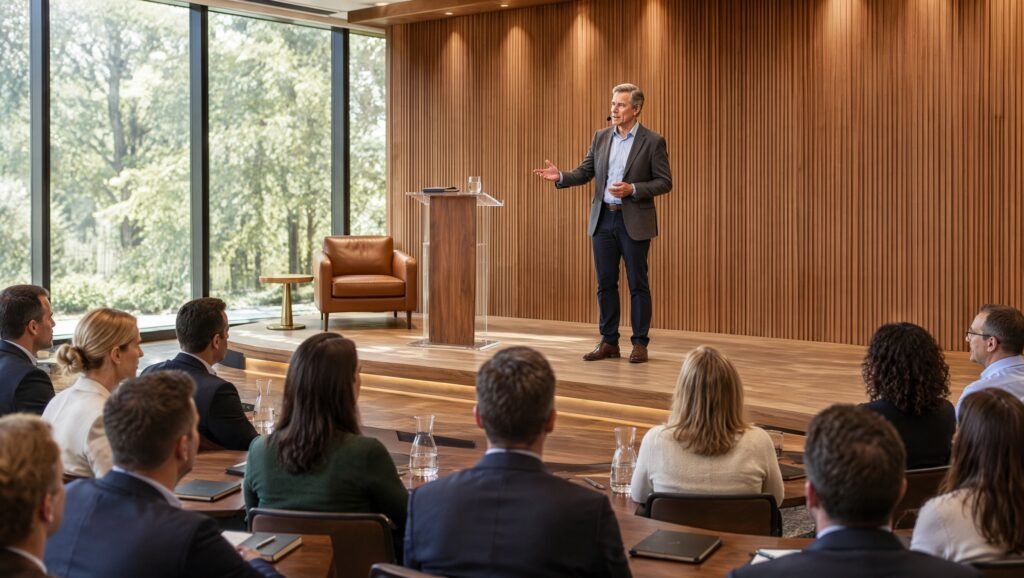
Faith and business are no longer treated as separate parts of professional life. Across industries, entrepreneurs, executives, investors, and business owners are exploring how their beliefs can influence leadership decisions, workplace culture, business growth, and long-term success. This growing interest has brought more attention to business leader speakers who understand both the commercial realities of running an organisation and the importance of faith-driven leadership.
But who are the people shaping these conversations? From experienced entrepreneurs and corporate executives to leadership authors and Christian business advocates, several influential voices are helping professionals connect their values with everyday business decisions.
Whether you are planning to attend a faith-driven conference, looking for leadership inspiration, or researching influential voices in Christian entrepreneurship, understanding these speakers can help you identify the right perspectives for your professional journey.
1. What Makes a Business Leader Speaker Influential?
A business leader speaker is more than someone who has achieved professional success. The most valuable speakers combine practical business experience with the ability to communicate meaningful lessons that audiences can apply in their own organisations.
At faith-driven business conferences, this combination becomes particularly important. Attendees are often looking for guidance on how to build successful companies without compromising their personal beliefs.
Influential speakers generally bring three important qualities:
Practical business experience: They have founded companies, managed teams, led organisations, invested in businesses, or navigated significant commercial challenges. Their advice comes from real situations rather than theory alone.
Values-based leadership: They demonstrate how principles such as honesty, accountability, service, stewardship, and responsibility can influence professional decisions.
The ability to inspire action: A good keynote speaker does not simply deliver an emotional message. They encourage audiences to reconsider their leadership approaches, identify opportunities for improvement, and put useful ideas into practice.
For example, a business owner struggling with employee retention may benefit from a speaker who explains how trust, transparent communication, and responsible management contribute to a healthier workplace.
The strongest speakers connect faith with practical leadership rather than treating them as unrelated subjects.
2. Notable Business Leader Speakers in Faith-Driven Conferences
Several recognised entrepreneurs, executives, authors, and leadership experts regularly contribute to conversations about faith, work, and business. Their backgrounds and perspectives make them relevant to different types of audiences.
John Maxwell – Leadership Development and Personal Growth
John Maxwell is widely recognised for his work in leadership development, team building, and organisational growth. Through his books, speaking engagements, and leadership training initiatives, he has influenced professionals across different industries.
His approach focuses on the importance of developing people, building trust, communicating effectively, and creating environments where individuals can grow.
For business owners and executives, his leadership philosophy offers practical lessons about developing capable teams and creating a sustainable organisational culture.
Maxwell was also included among the featured speakers at the 2026 Faith Driven Entrepreneur Conference, demonstrating the continued connection between leadership development and faith-centred entrepreneurship.
David Green – Faith, Entrepreneurship, and Business Stewardship
David Green, founder of Hobby Lobby, represents the entrepreneurial perspective within faith-driven business discussions.
His business journey provides an example of how personal beliefs can influence company ownership, organisational values, and long-term business decisions.
Green is particularly relevant to conversations about stewardship and values-based entrepreneurship. His experience encourages business owners to consider not only financial performance but also the responsibilities associated with building and managing an organisation.
For entrepreneurs, his perspective raises an important question: how can a business grow while remaining consistent with the principles that shaped its foundation?
Jordan Raynor – Connecting Faith with Everyday Work
Jordan Raynor is an influential voice in the faith-and-work movement. His writing and speaking focus on helping Christians understand the significance of their professional responsibilities and the relationship between faith, creativity, and meaningful work.
His books, including Redeeming Your Time and The Sacredness of Secular Work, explore how people can approach their careers and professional responsibilities with greater purpose.
Raynor is particularly relevant to entrepreneurs and professionals who want to understand how their everyday work can reflect their beliefs.
He has also appeared as an opening keynote speaker at the 2026 FCCI Gathering, where faith, leadership, and business practice are central themes.
Henry Kaestner – Faith-Driven Entrepreneurship and Investment
Henry Kaestner is the co-founder of Faith Driven Entrepreneur and Faith Driven Investor, as well as a co-founder of Sovereign’s Capital.
His work focuses on encouraging entrepreneurs and investors to consider how faith can influence business creation, capital allocation, and professional decision-making.
Kaestner brings an important perspective to conversations about entrepreneurship because he addresses both the opportunities and responsibilities associated with building and funding businesses.
His involvement in the 2026 Spark Business Leaders Conference reflects the growing interest in connecting entrepreneurship, investment, and faith-based leadership.
Patrick Lencioni – Organisational Health and Team Leadership
Patrick Lencioni is known for his work on organisational health, teamwork, leadership, and workplace culture. As the founder of The Table Group, he has helped organisations understand how internal relationships and management practices influence business performance.
His book The Five Dysfunctions of a Team is particularly relevant to business owners and executives seeking to improve collaboration and communication.
Lencioni’s perspective is valuable at faith-driven conferences because healthy organisational cultures require more than ambitious targets. They also depend on trust, accountability, clarity, and shared responsibility.
He was among the plenary speakers at C12’s CURRENT25 conference, which brought together Christian business leaders to discuss leadership and faith in the marketplace.
Mike Sharrow – Purpose-Driven Business Leadership
Mike Sharrow, president and CEO of C12 Business Forums, is another important voice in Christian business leadership.
C12 supports Christian CEOs, business owners, and executives through leadership development and peer advisory forums. Its work centres on helping business leaders build successful organisations while considering their broader responsibilities and purpose.
Sharrow’s perspective is particularly relevant to experienced business owners who face complex decisions involving profitability, employees, organisational direction, and personal values.
His contribution to CURRENT25 included discussions about the challenges of Kingdom leadership, making his work relevant to professionals seeking a practical approach to faith-centred management.
3. What Topics Do Faith-Driven Business Speakers Usually Cover?
Although speakers may have different professional backgrounds, their discussions often revolve around a shared objective: applying personal values to real business situations.
Understanding these themes can help conference attendees choose sessions that match their professional interests.
Leadership with Integrity
Business leaders regularly face decisions involving competition, employee relationships, financial pressure, and customer expectations.
Speakers discussing integrity explain why transparency, honesty, and accountability matter, particularly when difficult decisions have to be made.
For example, an entrepreneur may need to decide whether to accept a profitable contract that conflicts with the company’s ethical standards. A values-based leadership approach considers the long-term consequences rather than focusing exclusively on immediate revenue.
Entrepreneurship and Business Growth
Starting and growing a company requires financial planning, market understanding, risk management, and consistent execution.
Faith-driven entrepreneurship speakers explore how business owners can pursue growth while remaining responsible to their employees, customers, investors, and communities.
These discussions are useful for early-stage founders as well as established entrepreneurs looking to expand their operations.
Workplace Culture and Employee Development
A company’s culture is shaped by everyday management decisions. The way leaders communicate, recognise contributions, resolve disagreements, and handle mistakes influences the working environment.
Speakers in this area often discuss servant leadership, employee wellbeing, professional development, and the importance of creating workplaces where people feel respected.
Stewardship and Financial Responsibility
Faith-driven business conversations also examine the responsible use of money, resources, and professional influence.
Topics may include investment decisions, financial accountability, sustainable growth, charitable giving, and the responsibilities associated with business ownership.
These discussions help audiences consider how financial success can be balanced with responsible decision-making.
4. Which Business Leader Speakers Are Right for Different Audiences?
Not every speaker is suitable for every conference. The right choice depends on the audience, event objectives, industry, and the practical lessons organisers want attendees to take away.
Consider the following examples:
- Entrepreneurs and startup founders: Henry Kaestner and David Green offer relevant perspectives on entrepreneurship, business ownership, and faith-centred decision-making.
- Corporate executives and senior managers: Patrick Lencioni and John Maxwell bring valuable insights into leadership development, teamwork, and organisational performance.
- Christian professionals exploring their purpose: Jordan Raynor offers a perspective on connecting everyday work with faith and personal calling.
- Business owners managing established organisations: Mike Sharrow provides insight into executive leadership, business responsibility, and purpose-driven management.
Conference organisers should also consider the speaker’s communication style and ability to engage with the audience. A respected author may have valuable ideas, but an event focused on practical business challenges may benefit more from someone with direct experience managing a company.
The most effective choice is the speaker whose experience and message closely match the audience’s needs.
5. How to Choose a Valuable Faith-Driven Business Conference
Attending a conference can provide access to new ideas, professional relationships, and leadership insights. However, the quality of the experience depends on more than the popularity of its speakers.
Before registering, consider the following factors.
Examine the speaker lineup. Look beyond well-known names. Review each speaker’s professional background, business experience, and previous conference contributions.
Understand the event’s main purpose. Some conferences concentrate on entrepreneurship and investment, while others focus on Christian leadership, workplace culture, or personal development. Choose an event that addresses your current professional priorities.
Look for practical sessions. Keynotes can provide inspiration, but workshops, case studies, and interactive discussions often offer more opportunities to apply new knowledge.
Consider networking opportunities. Meeting other entrepreneurs, executives, and professionals can lead to meaningful conversations and potential collaborations.
Evaluate the organisers. Check the organisation’s history, previous events, programme details, and published speaker information. Reliable conference organisers communicate clearly about their objectives and event structure.
A worthwhile conference should leave attendees with ideas they can use after returning to their workplaces, not simply memorable speeches.
6. Notable Faith-Driven Business Conferences to Follow
Following established conferences is another way to discover influential business leader speakers and understand emerging discussions about faith and professional life.
Some notable examples include:
Faith Driven Entrepreneur Conference: This event connects Christian entrepreneurs, business professionals, and community leaders through discussions about entrepreneurship, purpose, and faith. Its 2026 speaker lineup included John Maxwell and David Green.
FCCI Gathering: Organised by the Fellowship of Companies for Christ International, FCCI brings together business leaders interested in integrating faith with business practice. Its 2026 gathering featured speakers including Jordan Raynor and Frank Kelly III.
C12 CURRENT: C12’s biennial CURRENT conference brings Christian CEOs, business owners, and executives together to discuss leadership, organisational development, and Kingdom impact. Its 2025 plenary lineup included Patrick Lencioni, Jordan Raynor, and Mike Sharrow.
Spark Business Leaders Conference: Spark provides a platform for conversations about business, entrepreneurship, investment, and faith. Its 2026 speakers included Henry Kaestner, Pete Ochs, and Dr. Richard Blackaby.
These events offer different approaches to faith-driven leadership. Reviewing their programmes can help professionals identify speakers and discussions that align with their interests.
Frequently Asked Questions
Who are the most influential business leader speakers?
Recognised voices in faith-driven business and leadership include John Maxwell, David Green, Jordan Raynor, Henry Kaestner, Patrick Lencioni, and Mike Sharrow. They bring different perspectives on entrepreneurship, organisational leadership, workplace culture, and faith.
What is a faith-driven business conference?
A faith-driven business conference is an event where entrepreneurs, executives, professionals, and faith leaders explore how personal beliefs and values can influence business decisions, leadership, workplace culture, and entrepreneurship.
Why should entrepreneurs listen to faith-driven business speakers?
These speakers can help entrepreneurs think more carefully about leadership, ethical decisions, employee relationships, financial responsibility, and long-term business purpose. Their insights can complement practical business knowledge and professional experience.
What should I look for when choosing a business keynote speaker?
Look for relevant business experience, subject knowledge, effective communication, and the ability to provide practical lessons. The speaker should understand the audience’s challenges and deliver insights that support the conference’s objectives.
Are faith-driven business conferences only for Christian business owners?
No. Although many events are organised around Christian principles, professionals from different industries and career stages may attend to explore ethical leadership, responsible entrepreneurship, workplace culture, and purpose-driven business practices.
Conclusion
Faith-driven business leadership is about bringing personal values into professional decisions without losing sight of commercial responsibilities. Speakers such as John Maxwell, David Green, Jordan Raynor, Henry Kaestner, Patrick Lencioni, and Mike Sharrow contribute different perspectives to this growing conversation.
For entrepreneurs, executives, and professionals, the value of these voices lies in their ability to connect leadership principles with practical business challenges. Whether the goal is to build a company, strengthen an organisation, develop a team, or lead with greater purpose, the right speaker can offer useful ideas and a fresh perspective.
Explore upcoming faith-driven business conferences, review their speaker programmes, and choose sessions that address the challenges you are working to solve. The most valuable lessons are those you can put into practice long after the conference ends.
